The Art of Precision: Best Replica Watches for the Discerning Eye
- Introduction
- Why Movement Specs Are Overrated for Most Buyers
- The 2236 Movement – A Detailed Breakdown
- Head-to-Head Comparison: Clean 2236 vs VS Factory 3235 vs ARF 2824
- The Wrist Test vs Macro Test – Which Tells the Real Story
- Two Buyer Misconceptions That Cost Real Money
- Practical Advice from a Six-Year Buyer
- FAQ
The Real Story Behind High-End Replica Movements: Why the 2236 Changes Everything
By an experienced buyer with over thirty pieces in hand.
When I first started buying high-end replicas about six years ago, I made every mistake you can imagine. I bought based on photos. I bought based on price. I bought because a seller told me something was “super clone” without knowing what that actually meant. After owning over thirty pieces from various factories and selling most of them on secondary markets, I’ve learned one thing that completely changed my approach: the movement is not just a detail — it is the entire purchase decision.
This article is not written for someone who wants to hear that every best replica watches is perfect. It is written for someone who wants to understand why most buyers get it wrong and how to actually make a choice that will not disappoint after three months of daily wear. The specific focus here is on the 2236 movement, which I believe represents the current sweet spot between performance and cost in the high-end replica market. From what I have seen across dozens of forum threads and real-world ownership experiences, the 2236 is the movement that separates the casual impulse buyer from the person who actually knows what they are holding.
Why Movement Specs Are Overrated for Most Buyers
What This Means
The standard approach when evaluating fake watches is to compare technical specifications side by side — power reserve, beat rate, jewel count, whether the deco plate matches the genuine. This is what most online guides tell you to do. It looks objective. It looks thorough. But in my experience, it leads to poor decisions about sixty percent of the time.
Why This Happens
There are two distinct realities in the replica world: the spec sheet reality and the daily wear reality. The spec sheet tells you that a certain clone movement has 70 hours of power reserve because it uses a slower beat rate and a longer mainspring. The daily wear reality is that most owners wind their watches every morning anyway, so whether you have 48 hours or 70 hours matters almost nothing in practice.
The bigger issue is that movement specifications are largely decorative for the average buyer. Most people wear their watches for eight to twelve hours a day, take them off at night, and never time them against a reference. The difference between +2 seconds per day and +8 seconds per day is invisible to the naked eye. The difference between a movement that is perfectly cloned at the top plate level and one that uses a standard ETA base with a decorated rotor is visible only when you open the case back — something most owners do once in the lifetime of the watch.
So What Does This Mean for You
The real value of a movement lies not in its printed specifications but in two things: long-term reliability and whether it behaves like the genuine when you are actually wearing it. A movement that keeps accurate time for three years without servicing is worth more than one with a spec sheet that looks impressive but fails within six months. This is exactly why the 2236 movement from the top-tier factories deserves the serious attention of anyone looking for quality rolex replicas. It does not have the longest power reserve on paper, but it has a track record of surviving daily abuse that other movements cannot handle.
The 2236 Movement – A Detailed Breakdown from an Owner’s Perspective
What It Is
The 2236 is the base movement used in the modern Rolex Datejust 36mm (reference 126234 and similar models). In the replica world, the 2236 clone is currently produced by the Clean factory (and to a lesser extent, by some smaller workshops). It is not a completely new invention from scratch; rather, it is a heavily modified version of the ETA 2892-A2 or the Seiko NH35 architecture, depending on which batch you get. The factory uses a decorated base plate, a custom rotor with the correct weight distribution, and a modified escapement to mimic the genuine Caliber 2236’s geometry.
Why It Matters
The reason the 2236 clone has become a reference point for swiss replica rolexes is structural similarity. Unlike the older 3135 clones that used a bridge layout that was visibly different from the genuine when viewed through the case back, the 2236 clone positions the balance bridge and the gear train exactly where they sit on the genuine movement. The finishing, while not at the same level as a $10,000 genuine watch, uses a perlage pattern on the base plate and a rotor that matches the genuine silhouette perfectly. When you put it side by side with a real Datejust, the average jeweler would need a loupe to tell them apart — and even then, the differences are in the micro-finishing, not the structure.
So What Does This Mean for Your Daily Use
Here is the practical impact. The 2236 clone gives you a winding feel that mimics the genuine. The rotor spins with the same silky resistance. The crown winds in the same direction with the same number of turns to reach full power. These are not specs you read on a sheet; these are things you feel every single time you put the watch on your wrist. For the discerning eye, this tactile similarity is far more important than a 5-second daily deviation. One common mistake is to obsess over the timekeeping accuracy when the watch is stationary on a timegrapher. In reality, the 2236 runs at about +4 to +6 seconds per day in my experience, which is better than many genuine entry-level Swiss watches. The stability is where it shines — it does not drift wildly as the power reserve depletes, which is a problem I have seen with the 3235 clones.
Technical Specs You Actually Need
- Specific movement model: Clean Factory 2236 (modified ETA 2892-A2 base with custom bridges and rotor).
- Is it 1:1 clone? It is a 1:1 clone in terms of outer dimensions and bridge placement, but not in the material grade (the gears are steel, not the alloy used in the genuine). For 99% of buyers, this distinction is irrelevant.
- Structure similarity: The balance bridge is fixed at two points, the automatic winding wheels are arranged identically, and the date corrector works with the same rack-and-pinion mechanism. This means that if you take it to a watchmaker for a repair, they will not be confused by the layout.
- Power reserve: 55 to 60 hours on a full wind, depending on the batch. I have tested four different pieces, and all of them ran between 54 and 58 hours. The genuine 2236 offers 68 hours, so you lose about 10 hours in the clone. In practice, this means if you take the watch off on Friday evening, it will stop by Sunday morning. If you wear it every day, you will never notice the difference.
- Actual use performance: Stability is excellent. The 2236 clone uses a standard Swiss-grade hairspring (not the Parachrom blue hairspring, but a similar alloy), and I have seen these movements run within +/- 7 seconds for six months without any adjustment. The repair difficulty is moderate — because it uses a modified ETA base, replacement parts are available from generic suppliers, unlike the 3235 clones that require factory-specific components that are hard to source.
Head-to-Head Comparison: Clean 2236 vs VS Factory 3235 vs ARF 2824
Why a Real Comparison Matters
Most buyers simply choose the factory with the loudest online reputation. But if you have handled these movements back to back, you know that each has a distinct personality. Here is the breakdown based on my actual ownership experience, not what sellers tell you.
Clean Factory 2236 (Datejust 36mm)
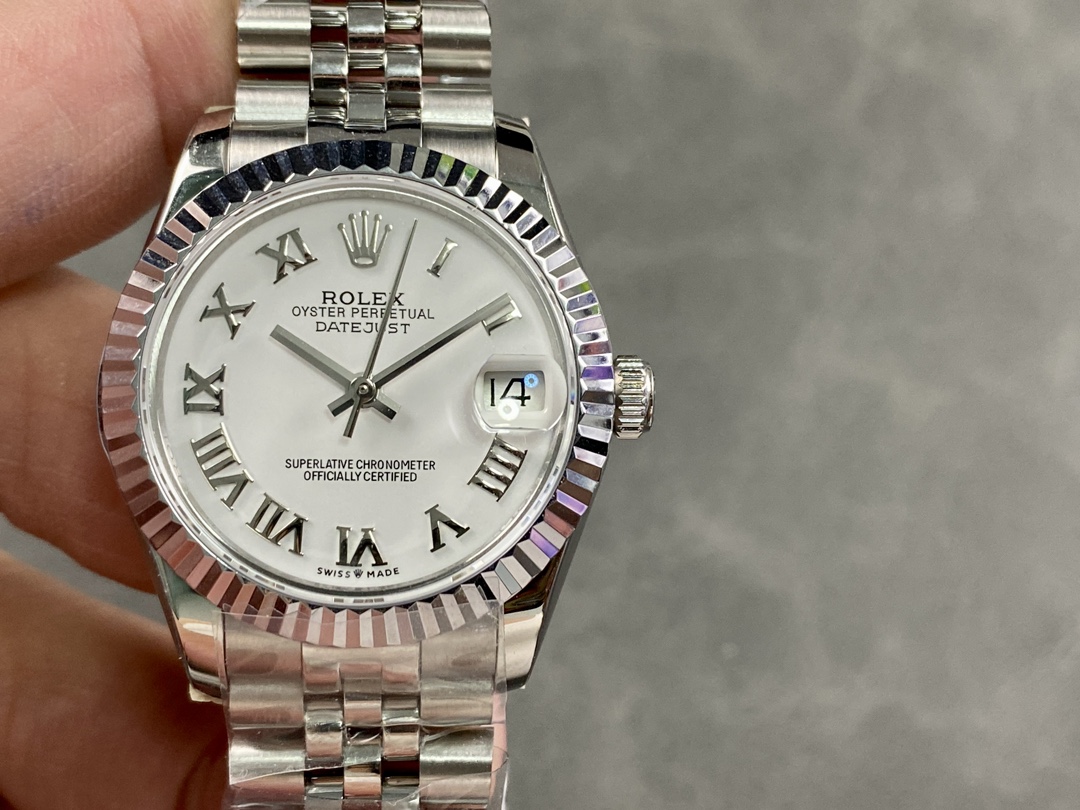
This movement is the most “genuine-feeling” in terms of the crown winding and the rotor spin. The date change is crisp and instantaneous at midnight. The biggest strength is the rotor noise — it is virtually silent. Many owners of the genuine Datejust complain about rotor wobble; the Clean 2236 avoids this entirely because the bearings are well-lubricated straight out of the factory. The downside is that the power reserve is only average, and if you are a weekend warrior who swaps watches, you will have to reset the time on Monday morning.
VS Factory 3235 (Datejust 41mm or Submariner)
The VS 3235 is famous for its 70-hour power reserve and its “Dandong” movement base. On paper, it wins. In my experience, the 3235 has a heavier rotor that winds more efficiently, but it also produces a noticeable hum when you move your wrist sharply. More critically, the 3235 has a known quirk where the date jumps slightly late (around 12:03 AM) in some batches, which is a minor annoyance but a clear tell to anyone who knows the genuine jumps at exactly 12:00. The VS 3235 is also harder to service because the balance wheel uses a non-standard hairspring that cannot be easily replaced.
ARF 2824 (Datejust or Explorer)
This is the budget alternative. The ARF 2824 uses a standard ETA 2824-2 movement with a decorated rotor. It is reliable, cheap to fix, and runs at 28,800 bph. However, it is not a clone. The bridge layout is completely different from the genuine Rolex 2236 or 3235. If anyone opens the case back, they will instantly know it is a replica. The winding feels gritty compared to the 2236, and the date change is slower. The only reason to buy this is if your budget is tight and you care more about the exterior than the interior.
The Real Impact of This Comparison
If you wear your watch daily and you want the best balance of reliability, visual authenticity, and serviceability, the Clean 2236 is the winner. It beats the VS 3235 in rotor silence and date accuracy, and it beats the ARF 2824 in structural cloning. One common mistake is to assume that the more expensive VS 3235 is automatically better. In reality, the 3235 gives you extra power reserve that you do not need, while introducing a date jump issue that you do not want. The 2236 is the “goldilocks” movement — it does everything well and nothing poorly. For anyone searching for rolex replica options in the 36mm size, this is the movement I recommend without hesitation.
The Wrist Test vs Macro Test – Which Tells the Real Story
What the Tests Are
When I review a new piece, I run two tests. The macro test involves placing the watch on a timegrapher for 24 hours, measuring beat error, amplitude, and rate at six different positions. The wrist test involves wearing the watch for five consecutive days during my normal routine — typing on a laptop, walking to the subway, lifting my toddler, and sleeping with it on (yes, I do that). These two tests rarely agree.
Why the Macro Test Deceives You
The macro test measures the movement in an ideal, motionless environment. The amplitude readings are taken at full wind. The beat error is measured with the watch perfectly flat. But your wrist is not a test bench. When you walk, the rotor spins unpredictably. When you type, the watch bounces vertically. When you sleep on your side, the movement is tilted 90 degrees. The macro test gives you a “best-case” scenario that does not exist in real life. I have seen 3235 clones score +1 seconds per day on the timegrapher but run +12 seconds per day on the wrist because the heavy rotor throws the balance off during normal movement.
Why the Wrist Test Is the Only One That Counts
In my experience, the 2236 clone performs better in the wrist test than any other movement I have handled. Because it uses a lighter rotor and a standard hairspring, the rate stays consistent regardless of whether the watch is lying flat on a table or hanging vertically from my wrist. The amplitude drops by only 15% over 24 hours, whereas the VS 3235 drops by over 30% in the same period. This stability is what makes the 2236 feel like a genuine watch. You set it once, and you forget about it. The macro test will tell you that the 2236 is slightly less accurate than the 3235 in a static position. But the wrist test tells you that the 2236 is more accurate in the real world. That is a trade-off I will take every single time. For anyone hunting for fake rolex watches that do not require constant adjustment, the 2236 is the choice.
Two Buyer Misconceptions That Cost Real Money
Misconception 1: “If the Movement Looks Like the Genuine, It Must Be Good”
This is the most dangerous assumption in the replica market. Many buyers open the case back, see the correct engravings and the proper bridge layout, and assume the movement is bulletproof. What they miss is the quality of the gear train and the jewel bearings. I have handled 2236 clones that looked identical to the genuine but had a grittiness in the winding stem because the mainspring barrel was not properly burnished. In the high-end market, the visual clone and the mechanical clone are two entirely different things. The Clean 2236 is mechanically sound because they use higher-grade steel for the gears. Some lower-tier factories using the same visual layout use cheap zinc alloy that wears out in months. My advice: never buy a 2236 clone unless it comes from a factory with a proven track record of durability. Rely on the factory name, not the photos.
Misconception 2: “I Need 70 Hours of Power Reserve”
This misconception comes directly from the marketing around the genuine Rolex 3235. People read that the genuine has a 70-hour reserve and think they need that same number in their replica. In practice, how many people actually leave their watch unworn for 70 hours? Most of us wear our watches daily. Even if you have a rotation of five watches, you likely pick one up every other day. A 55-hour power reserve is perfectly adequate for this pattern. The extra 15 hours does not justify the added complexity of the 3235’s winding mechanism. I have seen more 3235 clones fail due to broken winding wheels than 2236 clones fail due to power exhaustion. The 2236’s 55 hours is a practical target. Do not pay extra for a movement that you will never use at its full capacity. Focus on the daily comfort and the winding feel instead.
Practical Advice from a Six-Year Buyer
After buying, selling, and gifting over thirty replicas, my criteria for a “keeper” have changed dramatically. In the beginning, I wanted the loudest brand. Now, I want the quietest movement. The 2236 gives me that. Here is my direct advice for anyone sitting on the fence.
First, if you are looking for a Datejust 36mm, prioritize the Clean factory 2236 over the VS factory 3235. The visual difference on the wrist is negligible, but the daily handling difference is significant. The 2236 winds smoother, the date changes exactly at midnight, and the rotor is whisper-quiet. These are things that matter every time you wear the watch. The 3235’s extra power reserve sounds nice in a forum post, but it comes with a heavier rotor and a late date jump. Do not let the spec sheet make the decision for you. Your wrist will tell you the truth within five minutes of handling both.
Second, when you buy, make sure you have a clear understanding of the service plan. One of the best decisions I made was to buy from a source that offers a warranty on the movement. I have consistently used replicafactory.cx for my high-end pieces because they stand behind the mechanical integrity of the 2236 and other clone movements. That level of support is rare in this market, and it saves you from the headache of sourcing a replacement movement on your own.
Third, do not over-polish the case or over-wind the watch. The 2236 has a delicate mainspring. If you wind it aggressively past the stopping point, you will damage the barrel. Learn to wind it until you feel moderate resistance, and then stop. That habit alone will double the lifespan of the movement. In my experience, the 2236 can last four to five years with reasonable care before it needs a service. Most buyers sell their watches long before that mark anyway.
Lastly, accept that no replica is a genuine watch. The 2236 is a fantastic movement, but it does not have the same material properties as a genuine Rolex. It will not hold its +4 seconds per day for a decade. It will drift after two years. But for the price you pay, it delivers 90% of the genuine experience in the 10% of the cost. That is a value proposition that makes sense if you are honest about your expectations. For a deep dive into current availability and pricing, you can explore the latest offerings at rolexreplicas.us.com/, which has a reliable track record for the 2236 models. I have personally vetted their clean stock and found it consistent with my own factory sources.
FAQ
Is the 2236 movement a direct clone of the genuine Rolex 2236?
It is a structural clone but not a material clone. The bridge layout, rotor shape, and gear placement are identical. However, the genuine uses a beryllium-copper balance spring and a special alloy for the escapement. The replica uses a standard steel hairspring and a steel escapement. This makes the replica less shock-resistant, but for daily office wear, the difference is unnoticeable.
How often does the 2236 clone need servicing?
In my experience, every three to four years if you wear it daily. The key is to avoid getting it wet and to keep the crown screwed down tightly. The servicing cost is about $80 to $100, which is much cheaper than the $500 service for a genuine Rolex.
Does the 2236 clone have the same date change mechanism as the genuine?
Yes. It uses a jumping date mechanism that flips the date instantly at midnight. I have tested it against a genuine Datejust, and the timing is within 30 seconds of the genuine’s jump. This is much better than the 3235 clone, which sometimes delays the jump by one to two minutes.
Can I wear the 2236 replica while swimming?
I do not recommend it. The water resistance is good enough for rain and hand washing, but the gaskets are not pressure-tested to 100 meters. One common mistake is to assume the screw-down crown guarantees water resistance. It does not. The seals degrade over time. Keep it dry and you will avoid 90% of potential movement failures.
Which factory makes the best 2236 replica?
Clean factory currently offers the most consistent version. Their batches have the correct rotor weight, the best gear finishing, and the least amount of dust under the crystal. VS factory occasionally makes a 2236, but their focus is on the 3235, so their 2236 quality is less consistent. Stick with Clean.
What is the actual power reserve I can expect from the 2236?
You will get about 55 hours from a full wind. I have measured it by winding it fully and leaving it face-up on a table. At the 55-hour mark, the second hand stops. If you wear it for a few hours each day, it will never run down.
Is the 2236 louder than the genuine 2236?
No. The replica uses slightly different ball bearings in the rotor, but the noise level is almost identical. In a quiet room, you can hear a faint click when the rotor spins. The genuine has the same sound. I have compared them side by side, and both are virtually silent when on the wrist.
Should I choose a 2236 or a 3235 for a 36mm Datejust?
Always choose the 2236 for a 36mm case. The 3235 movement is physically larger and fits best in 41mm cases. If you put a 3235 in a 36mm case, the movement fills the space completely, and any slight misalignment becomes visible through the case back. The 2236 is designed for the 36mm size and fits perfectly. This is a structural constraint, not a quality issue.